Basics
Basic maintenance work for daily use
Seasonal
Seasonal care for winter and summer
Advanced
Advanced maintenance for professionals
Detailed Maintenance Instructions
Choose your experience level for tailored maintenance tips
Multi-tool
A compact tool with various hex keys, screwdrivers, and Torx bits for on-the-go adjustments.
Floor Pump with Pressure Gauge
Essential for maintaining proper tire pressure, which affects performance and comfort.
Chain Lubricant
Regular application extends chain life and ensures smooth shifting.
Tire Levers
Makes removing and installing tires much easier when fixing flats.
Cleaning Supplies
Bike-specific degreaser, brushes, and cleaning solution for regular maintenance.
Pre-Ride Checklist
Perform these quick checks before every ride to ensure safety and prevent mechanical issues:
Monthly Maintenance Routine
Set aside time each month for these important maintenance tasks:
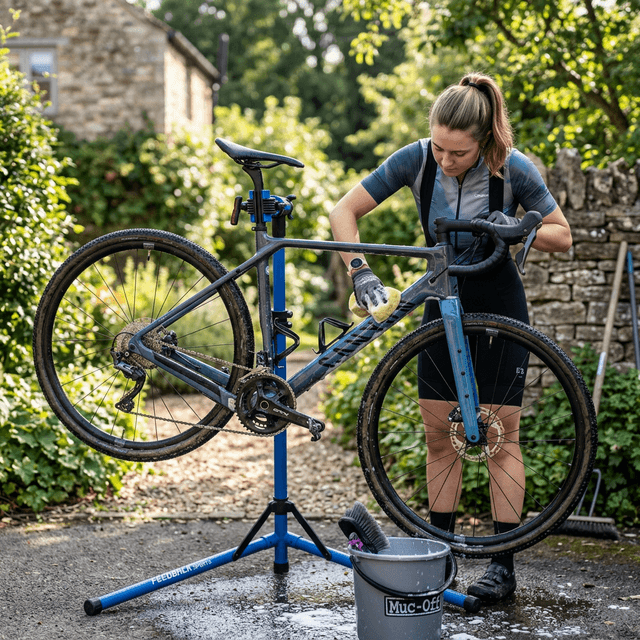
Cleaning Your Bike
- Start with a gentle rinse to remove loose dirt
- Apply bike-specific cleaner to the frame and components
- Use brushes to clean hard-to-reach areas
- Pay special attention to the drivetrain using degreaser
- Rinse thoroughly but avoid direct high-pressure water on bearings
- Dry completely with a clean cloth
- Apply lubricant to the chain and pivot points after cleaning
Chain Maintenance
The chain is one of the most important components to maintain. A well-maintained chain improves shifting, efficiency, and extends the life of your entire drivetrain.
- Clean your chain regularly with a degreaser and chain cleaning tool
- Wipe the chain thoroughly after cleaning to remove all degreaser
- Apply lubricant to each link, one drop per link
- Let the lubricant penetrate for a few minutes
- Wipe off excess lubricant to prevent dirt accumulation
- Check chain wear with a chain checker tool every few months
- Clean your bike more frequently due to salt and grime
- Use a wet-specific chain lubricant that resists washout
- Consider fenders to reduce spray and buildup
- Check brake pads more often as wet conditions accelerate wear
- Dry your bike after wet rides to prevent rust
- Apply frame protectant to guard against salt corrosion
- Check tire pressure more frequently as heat can increase pressure
- Use dry lubricant in dusty conditions
- Clean dust from suspension stanchions after dry, dusty rides
- Inspect tires for cuts that hot pavement can exacerbate
- Keep an eye on hydraulic systems as heat can affect performance
Spring Tune-up
After a long winter, give your bike a thorough spring check to prepare for the riding season:
Fall Preparation
Get your bike winter-ready before the cold and wet season arrives:
Long-Term Storage Tips
If you plan to store your bike for an extended period, follow these steps:
Bearing Service
Headset, bottom bracket, and hub bearings need periodic cleaning and regreasing.
Hydraulic Brake Bleeding
Removes air from the system to restore proper braking performance.
Suspension Service
Regular maintenance extends the life and performance of forks and shocks.
Wheel Truing
Adjusts spoke tension to correct wheel wobbles and ensure proper alignment.
Drivetrain Replacement
Replacing worn chains, cassettes, and chainrings to maintain shifting performance.
Drivetrain Deep Service
A thorough drivetrain service goes beyond basic cleaning:
- Remove the chain and soak it in degreaser for 15 minutes
- Remove the cassette and clean each cog individually
- Clean chainrings while inspecting tooth profiles for shark-finning
- Check chain wear using a chain checker tool — replace at 0.5% elongation
- Inspect derailleur pulleys for play and worn teeth
- Regrease the freehub body and check for smooth engagement
- Reassemble and fine-tune front and rear derailleur limit screws
- Perform a full index adjustment for crisp shifting
Torque Wrench
Essential for tightening bolts to specific torque values, especially on carbon components.
Chain Whip & Cassette Tool
Required for removing and installing cassettes during drivetrain replacement.
Bleed Kit
Specific to your brake brand (Shimano, SRAM, Magura), needed for hydraulic brake maintenance.
Bottom Bracket Tool
Varies by BB type — Hollowtech II, PF30, T47 each require their own tool.
Spoke Wrench
Allows precise spoke tension adjustments during wheel truing.
Cable Cutter
Clean cuts on brake and shift cables ensure smooth operation.
When to Visit a Professional
Some jobs are best left to experienced mechanics:
Advanced maintenance tasks often require specialized tools and knowledge. When in doubt, consult a professional bike mechanic.
Related Resources
More helpful resources for your bike care